The Natural Claim Does Not Explain the Whole Product
A natural food claim can sound reassuring, but it leaves key details unanswered. Learn how to compare ingredients, processing and product forms.
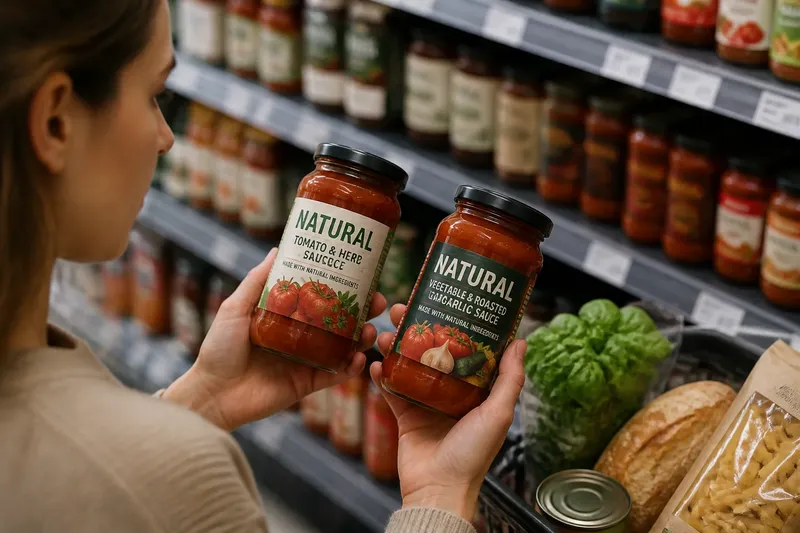
You are choosing between two jars of pasta sauce, and one says “natural” in large letters. That natural food claim may catch your eye, but it does not tell you what the sauce contains, how it was made or how it compares with the jar beside it. The useful clues are elsewhere on the pack.
What does “natural” mean on a food label?
“Natural” is a broad description, not a complete account of a food’s ingredients or production. Its meaning can depend on the product, the wording around it and the rules that apply where it is sold. A front-of-pack claim is therefore a prompt to look further, not a shortcut to a full picture.
Read the exact phrase rather than the word alone. “Made with natural ingredients” makes a different claim from “natural flavouring”, for instance. Neither phrase, by itself, tells you how much of the product comes from a particular ingredient or what else is in the recipe.
For an individual product, local labelling rules and the manufacturer’s explanation may clarify a claim. The ingredient list and other label details remain the practical place to check what is present.
Does “natural” mean the product is minimally processed?
No. The word alone does not describe every processing step. Foods may be washed, milled, heated, fermented, dried, frozen or blended, and a natural claim does not spell out which methods were used.
Processing is not one single category. Chopping tomatoes for sauce changes their form; heating can make a food safer or more suitable for storage; adding several ingredients creates a recipe. Those distinctions matter more than treating “processed” as a simple opposite of “natural”.
If the production method matters to you, look for a specific statement on the pack or ask the maker what it means. Do not infer a detailed process from a short front-label phrase.
What should I check beyond the natural claim?
Turn the pack over and read the product name, ingredient list and any relevant declarations. These answer different questions: the name identifies what is being sold, the ingredients show what goes into it, and other label information can describe features such as flavourings or allergens.
Compare like with like. Two sauces, breads or snacks may use the same appealing claim while having different recipes, textures and uses. Decide what matters for your meal first, then inspect the details that speak to that choice.
- Product name: Is it the food you intend to buy, or a flavoured or prepared version?
- Ingredient wording: Are there ingredients you wish to avoid or are curious about?
- Flavour description: Does the pack say “natural flavouring”, “flavoured” or something more specific?
- Food form: Is it a paste, concentrate, ready-made mixture or a more basic ingredient?
- Use and texture: Will it suit the dish, or would a different form work better?
There is little value in trying to decode the entire production history from the word “natural”. It cannot carry that much information, and guessing from packaging can distract from the concrete details you can actually read.
How do I compare two products carrying the claim?
Set the packages side by side and compare their ingredient lists and intended uses, rather than ranking them by the front-label wording. Check whether the products are genuinely similar: a plain tomato passata and a seasoned pasta sauce are not interchangeable just because both make a natural claim.
Say you are choosing between two jarred sauces for a quick supper. One is a smooth tomato sauce with herbs; the other is a thicker sauce containing vegetables and added seasoning. If you want a base to season yourself, the first may fit better; if you want more of the flavour already built in, the second may suit. The claim does not settle that choice—the recipe and the job you need it to do do.
When the labels are hard to compare, look for the clearest product description and the ingredient details that matter to your decision. A shorter-sounding name or a more prominent natural claim does not automatically make one product the closer match.
Does natural flavouring tell me where a flavour came from?
Not necessarily. The phrase identifies a type of flavouring claim, but it does not always name the original source in a way that lets you picture the full production chain. If the source matters to you, look for a more detailed explanation from the manufacturer.
Also separate flavour from the food’s main ingredients. A product can have a natural flavouring and still contain other ingredients that shape its body, sweetness, saltiness or texture. Read the full list rather than treating one phrase as a description of the whole recipe.
Is a natural product always a better food choice?
“Better” depends on what you need from the food. You may care about taste, convenience, a particular ingredient, how the product fits a recipe or other information on the label. The natural claim does not resolve those priorities for you.
Use it as one small piece of information, then make the choice against your own criteria. For a sauce, that might mean checking whether it is smooth enough for a child’s meal or seasoned enough to serve without extra additions; for another food, the deciding detail will differ.
The next time a natural food claim catches your eye, treat it as an invitation to ask a sharper question: what, exactly, do I want to know about this product? The ingredient list, product description and intended use can then give you a more useful answer than the claim can on its own.