Before the Fridge: The Changing Work of Food Preservation
Food preservation methods such as drying, salting, fermenting and refrigeration do different jobs. Learn what each changes and how to choose a useful form.
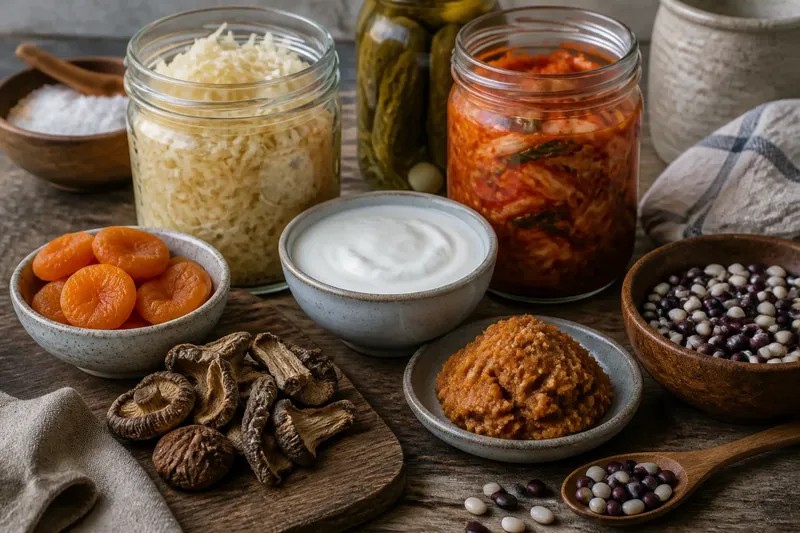
A jar of sauerkraut, a packet of dried apricots and a tub of yoghurt can sit in the same kitchen, yet each owes its keeping quality to a different kind of change. Food preservation methods alter water, salt, acidity, temperature or air, often changing flavour and texture along the way.
Follow the job each method does rather than treating every preserved food as a substitute for fresh food. Drying removes water; salting draws it out and seasons what remains; fermentation lets microbes transform food; refrigeration slows many changes without stopping them. The difference helps explain why foods with similar storage needs can behave differently in a meal.
Start with the problem preservation is meant to solve
Food changes as microbes grow, enzymes act, or air and moisture alter colour, smell and texture. Preservation methods target different parts of that picture. A product may combine methods rather than rely on one, and none makes food untouched by time.
When you pick up a preserved food, check these details before deciding how to use it:
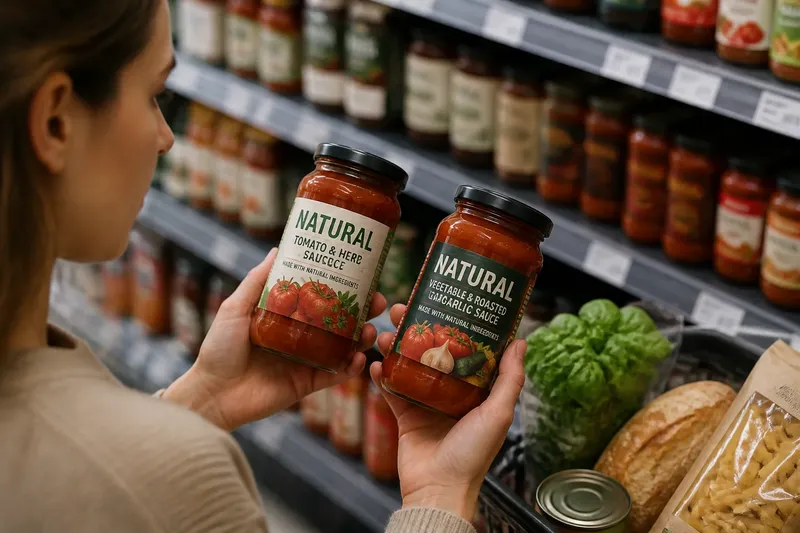
- Check whether the pack describes the food as dried, salted, fermented, chilled or a combination; if it names a method, consider the resulting form, and if it does not, use the ingredient list and storage directions for clues.
- Check whether the food is ready to eat; if the label says to soak or cook it, plan that preparation, and if it is ready to eat, use it as directed.
- Check whether the ingredient list names salt, vinegar, sugar or oil; if an addition matters to your choice, compare the listed ingredients, and if it does not, focus on form and intended use.
- Check the storage instructions before and after opening; if the pack calls for chilling, refrigerate it as directed, and if it allows cupboard storage, follow any after-opening advice.
- Check the texture and flavour the dish needs; if you need moisture or a tender bite, choose a suitable moist product, and if you need crunch, chew or concentrated flavour, consider a dried or cured form.
- Check whether the food is an ingredient or a seasoning; if it is a condiment such as miso, use it to add flavour, and if it is a substantial ingredient such as dried beans, allow for the preparation it requires.
These checks are more useful than asking whether a food is simply “preserved”. Dried beans and fermented bean paste may both be pantry staples, but they have different forms, uses and preparation demands.
Drying keeps food by taking away available water
Drying reduces the moisture many microbes need to grow. Depending on the food and process, the result may be leathery, crisp, chewy or powdery. Raisins, dried mushrooms, herbs, flour and powdered milk all have less moisture, but they are not interchangeable.
Removing water concentrates what remains. A dried apricot tastes more intense and has a denser bite than a fresh one; dried herbs can be potent in a small pinch, though their aroma differs from fresh leaves. Some dried foods need water returned before cooking. Others are ready to eat or can go straight into a dish with enough liquid.
Choose dried food by its form and intended use. Whole dried mushrooms may suit a broth after soaking, while mushroom powder can season a sauce. Check the ingredients for additions such as sugar or oil if those matter to your choice. Drying explains the reduced moisture, but not every feature of the product.
Salting draws moisture out and builds a savoury character
Salt can draw water from food and make the surrounding conditions less favourable to many microbes. It also changes flavour and texture. Salted fish, cured olives and brined vegetables show how one ingredient can support very different foods.
Dry salting means applying salt directly; brining means placing food in a salt solution. Some products combine salt with drying, smoking, acidity or refrigeration. A cured food might be ready to eat, require soaking, or need cooking. The product label and recipe can clarify its intended use.
Salt is also part of a food’s flavour. If you are choosing between similar products, check the ingredient list and nutrition information for the detail that matters to you. Rinsing or soaking can alter taste, but it does not make every product equivalent to another. For individual dietary needs, seek advice from a qualified health professional.
Fermentation changes food through microbial activity
In fermentation, microbes transform components of food. Depending on the food and process, they may produce acids, gases or alcohol, along with distinctive aromas. Yoghurt, kimchi, sourdough and miso are familiar examples, but their ingredients, textures and uses vary.
Acid produced during some fermentations can help limit the growth of unwanted microbes. Fermentation also develops taste: yoghurt’s tang, sourdough’s aroma and kimchi’s sharp, savoury character are not simply flavours added afterwards. It can soften ingredients or change their texture, too.
Not every tangy food is fermented, and fermented foods are not all stored the same way. Pickled vegetables, for example, may be acidified with vinegar rather than fermented. A product may also combine fermentation with refrigeration or another method. Read the product description and ingredients for clues; the name on the front may describe a style or flavour without revealing the full process.
Refrigeration slows change rather than removing it
Cold storage slows many microbial and enzymatic changes. That is why fresh milk, cooked leftovers and many prepared foods are kept chilled. Refrigeration does not remove moisture as drying does or create the same acidity as fermentation. It mainly slows change while keeping food moist.
Chilled foods often need continued cold storage and a clear use-by date, while some dry pantry foods can be stored unopened at room temperature. Opening a pack can expose food to air or handling, changing the conditions. Follow the label’s storage and handling advice. Where safe storage depends on manufacturer instructions or local rules, those directions take precedence.
Refrigeration can be combined with other methods. A jar of fermented vegetables may be chilled to slow further change; smoked fish may be salted and refrigerated. In these cases, cold is one part of the preservation story, not the explanation for every aspect of the food.
Compare preserved forms by the job they do
A useful comparison starts with the food’s form and the role it needs to play in your meal. For a crisp snack, dried fruit may suit better than fresh fruit. For a sharp accompaniment, fermented cabbage and vinegar-pickled cabbage may both work, but their flavours and production methods differ. If you need a moist ingredient with little preparation, refrigeration may matter more than a pantry-stable dried option.
Say you are making soup and have fresh, dried and fermented mushrooms to hand. You want a tender bite as well as savoury depth. Choose the fresh mushrooms for texture, then add a small spoonful of fermented mushroom condiment for seasoning; leave the dried mushrooms aside because soaking them would add another preparation step. The resulting soup should have a clear mushroom presence without asking one product to provide both texture and seasoning.
It is not worth ranking preservation methods from “best” to “worst” in the abstract. Compare products that could serve the same role, and let their form, preparation and storage directions settle the choice.
Why do foods appear in different preserved forms?
Does drying always mean a food is ready to eat?
No. Dried fruit and herbs are often used as they are, while dried beans and some mushrooms usually need soaking or cooking. Check the product directions and choose a form that fits the preparation time and texture you want.
Is every pickled food fermented?
No. Some vegetables are fermented by microbes, while others are preserved in vinegar or another acid. Ingredients and the product description can help distinguish them, and the flavours may differ even when both taste sour.
Why does a fermented food sometimes need refrigeration?
Fermentation does not mean a product can always be stored at room temperature. Chilling may slow further changes or be required for that particular food, so follow its storage directions.
Can refrigeration replace drying or salting?
Not in every situation. Refrigeration slows change while keeping food moist, whereas drying and salting alter moisture and flavour in different ways. The methods suit different foods, uses and storage conditions.
Choose a preservation method that fits the meal
When you encounter an unfamiliar preserved food, begin with its form, then ask what the method contributes: reduced moisture, saltiness, acidity, slower change, or some combination. Check whether it needs preparation and how it should be stored. That sequence turns a vague category into a useful decision about taste, texture and convenience.
Food preservation methods are easiest to understand as distinct tools, not as a ladder from old to new. For your next purchase, let the food’s form guide its role in the dish, then use the label to settle practical questions about preparation and storage.