Fresh, Frozen or Canned Peas for the Meal Ahead?
Fresh, frozen or canned peas suit different meals and routines. Compare texture, storage and preparation to choose the form that fits tonight’s dish.
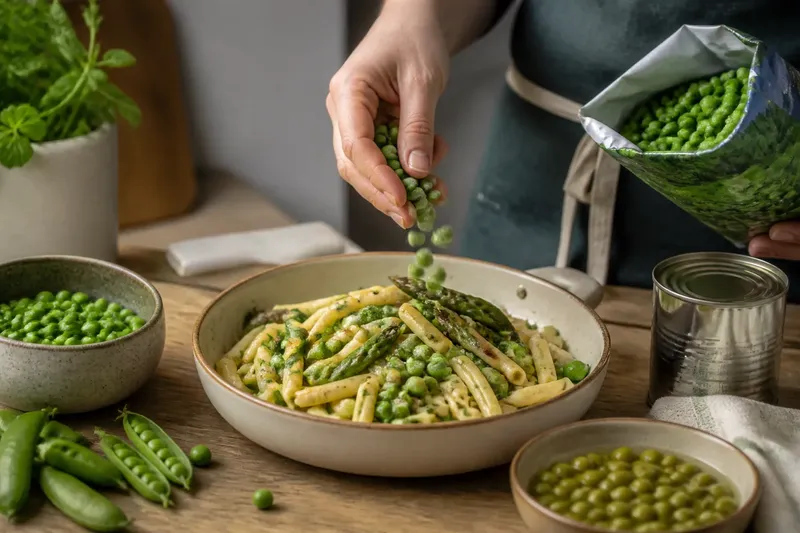
A pan of pasta is nearly ready, but the peas are still in their pods. Fresh, frozen or canned peas can all finish the meal; the best choice depends on the bite you want, the preparation you can manage and what is already in your kitchen.
Fresh peas need shelling, frozen peas are ready to add, and canned peas are cooked and soft. Those differences shape how each form works in a side dish, soup or pasta, without making one universally better than the others.
Fresh peas suit dishes where their bite can shine
Fresh peas are usually sold in pods. Choose pods that look plump and feel crisp, then shell them close to cooking. That hands-on preparation makes sense when the peas will stay visible, as in a simple side with butter and mint, a spring salad or pasta tossed with soft herbs.
Add shelled peas towards the end of cooking, rather than simmering them alongside ingredients that need much longer. They can lose their colour and distinct texture if cooked until very soft. Pods also take up space, and fresh peas need attention sooner than a tin in the cupboard or a bag in the freezer.
If you buy more than the dish needs, shell the remainder and cook or freeze it soon, following suitable food-handling guidance. Fresh peas are a pleasant choice when shelling fits the occasion, not an obligation for every meal.
Frozen peas make quick additions to hot dishes
Frozen peas are shelled and ready to use. Add them straight from the freezer to soup, risotto, fried rice or pasta water; for most hot dishes, there is no need to thaw them first. Stir them in late enough to warm through without turning mushy.
Their texture is usually tender but still distinct, making frozen peas useful when you want recognisable green pieces without shelling. For a cold salad, cook them briefly and cool them before mixing them with the other ingredients.
Keep the bag closed or transfer the peas to a well-sealed container so you can take out a portion. Freezer space is the trade-off, and a bag tucked behind other food can be easy to forget. Frozen peas are handy when fresh pods are unavailable or you want a ready-to-use ingredient on hand.
Canned peas work well in softer dishes
Canned peas are already cooked. Drain them and warm them gently, or use them cold in a salad. Their soft texture suits a quick soup, savoury pie filling or mash with potato, but is less suited to a dish that depends on a firm bite.
An unopened tin can wait in the cupboard without taking up fridge or freezer space. After opening, transfer any leftovers to a covered container, refrigerate them and follow the product guidance for use. You can drain away the packing liquid or keep some for a soup or stew, depending on the flavour and consistency you want.
Check the label when comparing tins: peas may be packed with salt, and the ingredients and nutrition panel can help you choose according to your preferences. Draining and rinsing can remove some surface salt and packing liquid, but not all the salt in the peas.
Choose a pea form by texture, preparation and storage
Start with the dish. Fresh or frozen peas are a better starting point when you want each pea to hold its shape; canned peas suit a softer filling or quick soup. Then consider the practicalities: shelling, freezer space and whether you want to open a tin.
- Fresh pods: Check that they look plump and feel crisp. If they do and you have time to shell them for a dish where peas stay distinct, use fresh; otherwise choose frozen or canned to avoid the preparation.
- Frozen peas: Check that you have freezer room and want a ready-to-use portion. If both are true, add them from frozen to a hot dish; otherwise choose fresh if you have pods, or canned for a cupboard-ready option.
- Canned peas: Check whether a soft texture suits the recipe. If it does, drain and warm gently or use cold; if the peas need to hold their shape, choose fresh or frozen.
- Cooking time: Check whether the recipe simmers for a long time. If it does, add fresh or frozen peas near the end; if you are using canned peas, warm them gently rather than simmering them for the full cooking time.
- Salt preference: Check the tin’s ingredients and nutrition panel. If the packing liquid or salt does not suit your preference, compare another tin or drain and rinse the peas; otherwise keep some liquid if its flavour and consistency suit the dish.
- Leftovers: Check how you will store any unused peas. If they are fresh, plan to use or preserve them promptly; if frozen, close the package and return it to the freezer; if canned, refrigerate leftovers in a covered container and follow the product guidance.
Say you have a hypothetical bowl of shelled peas from a fresh pod, a partly used bag of frozen peas and an unopened tin, and you are making vegetable pasta. You want distinct green pieces and have little time. Check the fresh peas: they could suit, but shelling takes extra effort; check the frozen bag: it is already open and fits the desired texture, so add a handful from frozen to the pasta water near the end and drain everything together. The expected result is tender peas with some shape and no shelling; the trade-off is using freezer space and remembering to close the bag. If instead you wanted a softer, creamier pasta, drain the tin and stir the peas through gently.
Choosing fresh pods because they sound more virtuous is not worth the effort if their texture will disappear in a long-cooked or blended dish. Match the form to the result you want, then let convenience settle the choice.
Which pea form answers common cooking questions?
Can frozen peas go straight into soup?
Yes. Add them from the freezer towards the end of cooking so they warm through without becoming overly soft. If you plan to blend the soup, their shape matters less, though long cooking can still soften their flavour.
Should canned peas be rinsed before serving?
Rinsing is optional and depends on the dish and your preference. It removes some packing liquid and surface salt; keeping the liquid may suit a soup or stew that needs a little extra body.
Are fresh peas worth shelling for a cooked dish?
They can be, especially when their tender bite is part of the dish and you enjoy the preparation. For a recipe that cooks peas for a long time or blends them smooth, frozen or canned peas may be more convenient.
How should leftover peas be stored?
Keep fresh peas chilled and use them promptly; return frozen peas to the freezer in a closed package; refrigerate opened canned peas in a covered container. Follow product instructions and local food-safety guidance where they differ.
For fresh, frozen or canned peas, texture is a useful first clue: distinct peas call for fresh or frozen, while a softer result points towards canned. Check how much preparation and storage each option asks of you, and choose the one that suits both the plate and the kitchen you have today.