A Pantry Check Before You Plan the Week
A pantry check before you plan the week helps you spot meal anchors, plan around what is on hand and make a focused list of missing ingredients.
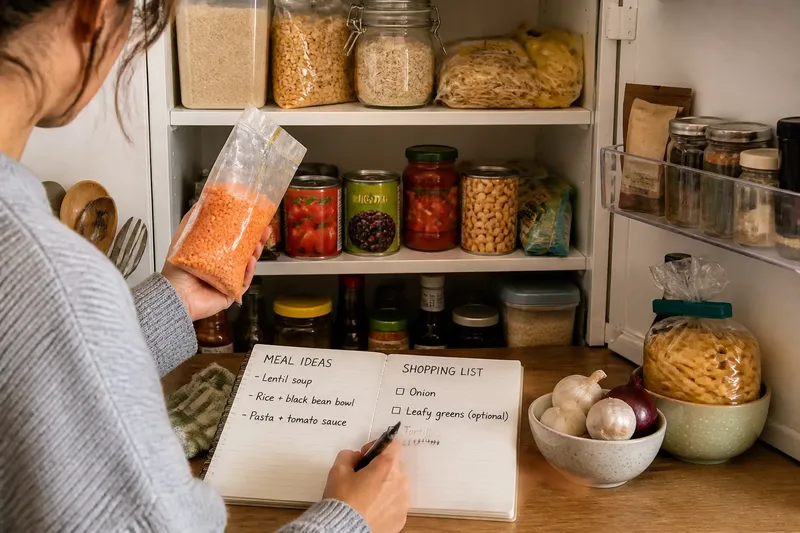
You reach for rice and uncover a half-used bag of lentils, a tin of tomatoes and noodles pushed to the back. A pantry check before you plan the week turns those forgotten ingredients into a clear shopping decision: which meals can they support, and what is actually missing?
Keep the focus on planning, not on making the cupboard look perfect. You do not need to catalogue every tin. A quick look at what is already in the house can prevent duplicate buys and give your week a few flexible starting points.
Scan the cupboard for planning clues
Choose one cupboard or shelf. Look at what is visible, including open packets and ingredients kept nearby, such as rice in a jar or stock cubes in a drawer. Note foods that could shape a meal, rather than trying to record every item.
Check packaging and storage instructions before putting anything on the plan. Follow use-by dates and directions for opened foods; if you are uncertain about safety, do not rely on appearance or smell to settle the question. A best-before date concerns quality, but sensory checks cannot reliably establish that food is safe. Follow the product instructions and applicable local food-safety guidance, and discard food if you have a safety concern.
Bring ingredients you might plan around into view. Keep open packets easy to spot, and use a clip or sealed container if it helps you store them as directed. Decanting everything into matching jars is not necessary.
Use pantry roles to build a flexible plan
Instead of making an inventory by aisle, think about what each ingredient can contribute to a meal. This is a planning tool, not a test of whether every dish has a perfect balance of components.
- Meal foundations: rice, pasta, noodles, couscous, oats or bread kept in the freezer.
- Substantial ingredients: beans, lentils, chickpeas, tinned fish or nut butter.
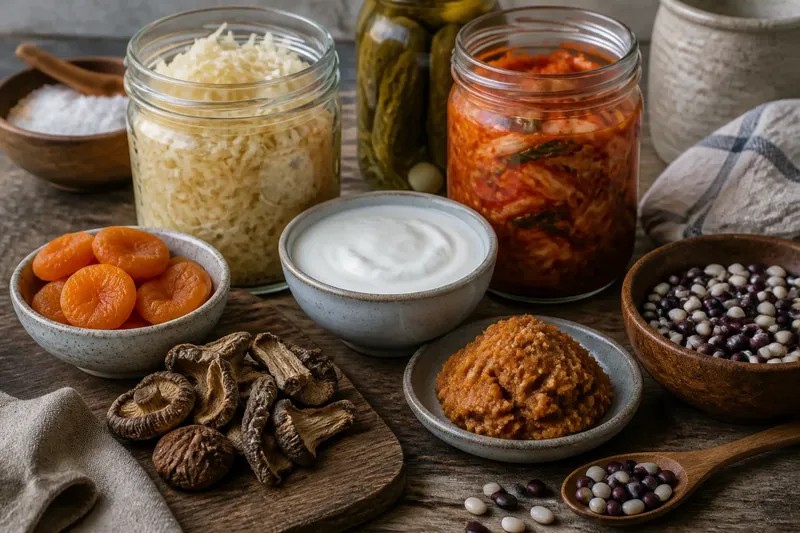
- Meal-shaping ingredients: tinned tomatoes, passata, dried mushrooms, jarred peppers or stored fruit.
- Flavour and sauce: spices, curry paste, soy sauce, vinegar, mustard or stock.
- Useful additions: seeds, nuts, dried fruit, olives, breadcrumbs or cheese from the fridge.
One ingredient can have several roles. Coconut milk might make a soup creamy or form part of a sauce. Ask what it could help you cook with the foods already at home, rather than starting with a recipe that demands a long list of extras.
Choose meal anchors that solve a planning problem
A meal anchor is an ingredient that gives you a direction for a meal. A bag of lentils might suggest soup; beans could become a wrap filling or join a tomato sauce. Choose anchors because they fit the week ahead or help you use an open ingredient, not simply because they are taking up space.
Check each idea against three practical questions: can you make it with familiar methods, does it fit a day when you could cook it, and will the ingredients keep as needed until then? If the idea requires several missing items or awkward timing, leave it off the plan. That is a useful planning decision, not a failure to use the pantry.
Say you find rice, a tin of black beans and a jar of salsa. You want a meal for an evening when you have little time. First, set the beans and salsa as the anchor and rice as the foundation. Next, check the fridge and freezer: in this invented situation, there is frozen sweetcorn but no onion. You decide the rice bowl can work with the sweetcorn, so neither onion nor another ingredient goes on the list. If the sweetcorn were absent and you wanted a vegetable addition, you could add one familiar option to the shopping list instead.
Plan around what the week can accommodate
Pantry meals still take time and attention. Before adding one to a particular day, consider whether it needs soaking, chopping, a long simmer or a fresh ingredient you rarely keep. Put the more involved idea on a day that suits it, or choose a simpler use for the same anchor.
Keep the plan deliberately loose. You might note “lentils for soup” and “pasta with tomato sauce” without assigning every meal to a fixed day. That leaves room for fresh food, leftovers and changes in appetite or routine.
If an ingredient is open or you are keen to use it, make that a planning clue, not a reason to take risks. Check its storage directions and condition in light of relevant food-safety guidance. Where safety is uncertain, leave it out and plan with something else.
Write a shopping list from the gaps
For each meal idea, separate what is essential from what is optional. “Onion for lentil soup” is a clear gap; “leafy greens if they would suit” is an optional addition. Then check the fridge and freezer for an ingredient that could do the same job.
- If a meal has its foundation and main ingredient: add only a missing item needed to make the dish work; otherwise, leave that meal off the list.
- If a sauce or flavour-maker is missing: check for a suitable alternative already at home; if none fits, add one familiar option or choose another meal.
- If a fresh ingredient is needed: check whether it fits the day you plan to cook; if not, choose a stored alternative or move the meal.
- If an open food has unclear storage directions: consult its packaging and applicable guidance; if safety remains uncertain, do not plan to use it.
- If several meals need the same ingredient: note it once on the list; if the meals no longer suit your week, keep only the one you are most likely to make.
- If the list includes optional extras: mark them as optional; if you want a shorter shop, leave them out and keep the core meals intact.
It is not worth rearranging every tin by colour, transferring every dry food to matching jars or building a spreadsheet unless one of those habits genuinely helps you plan. A visible shelf and a few meal notes are usually enough. In a shared kitchen, make the plan readable and leave room for ingredients other people rely on.
Which pantry foods can anchor a meal?
Can beans anchor a meal?
Yes. Beans can be the substantial ingredient in a soup, stew, salad or wrap filling, depending on the other foods you have. Pair them with a foundation or vegetables and a flavour-maker that suits the meal you want.
Should I plan around an ingredient I have never used?
Only if you are happy to keep the meal straightforward and can check the preparation instructions. If it calls for unfamiliar techniques or several extra purchases, choose a familiar anchor instead.
How should I handle several open packets?
Check each packet’s storage directions and decide whether its contents fit a meal you intend to make. Combine foods only when their preparation and storage needs suit the plan; if safety or suitability is uncertain, do not use them.
How many meal ideas should I plan?
Choose enough ideas to make the shopping list useful without fixing every meal in advance. A handful of flexible plans can leave space for fresh food, leftovers and changed plans.
Keep the pantry check focused on decisions
A pantry check before you plan the week is most useful when it changes what goes on the shopping list. Spot a few suitable ingredients, choose meals that fit your time and storage needs, then buy only the missing links. The cupboard does not need to be empty before you shop; it only needs to make your next choice clearer.